



Editorial
Energy Security Through 2027: Structure Reprices Power Credit
October 19, 2026 - Energy security now prices into Latin American power credit, and capital structure, not falling rates, decides which dispatchable projects close.
Editorial


Creditor requirements for FinTech debt financing in Emerging Markets shifted structurally in 2025 when AI credit infrastructure moved from pilot deployment to operational underwriting input.
Near-shoring corridors in Egypt, Côte d'Ivoire, Chile, and Mexico generate new payment flows that capital providers recognize as collateralizable assets for development-lender-backed credit facilities.
Deal preparation, not funder selection, determines whether an institutional debt round closes within 24 months or stalls in due diligence indefinitely.
Loan-book-backed facilities suit digital lenders and payments operators, while balance sheet structures fit companies with longer operating histories and audited financials.
Development-lender-led syndicated debt financing closes for payments operators with proven volumes, as the EUR€90MM Wave facility in Côte d'Ivoire and Senegal demonstrates.
FinTech debt financing in Emerging Markets entered a new qualification regime in 2025. Founders and CFOs at digital lending companies, payments operators, and embedded finance businesses now navigate a different structured lending environment. Their markets include Egypt, Côte d’Ivoire, Chile, Mexico, and Nigeria, where machine-learning credit infrastructure adoption and near-shoring trade route formation have reshaped creditor behavior. This article covers what capital providers now require, what structures fit which companies, and what preparation determines whether a debt round closes.
Institutional credit refers to credit facilities from Development Finance Institutions (DFIs), impact funds, commercial banks, and other financial institutions that meet standardized criteria: documented loan book assets or audited cash flows, governance standards, and development-lender mandate alignment. It differs from equity in that creditors take repayment risk rather than an ownership stake, and from informal credit in that participation requires institutional underwriting.
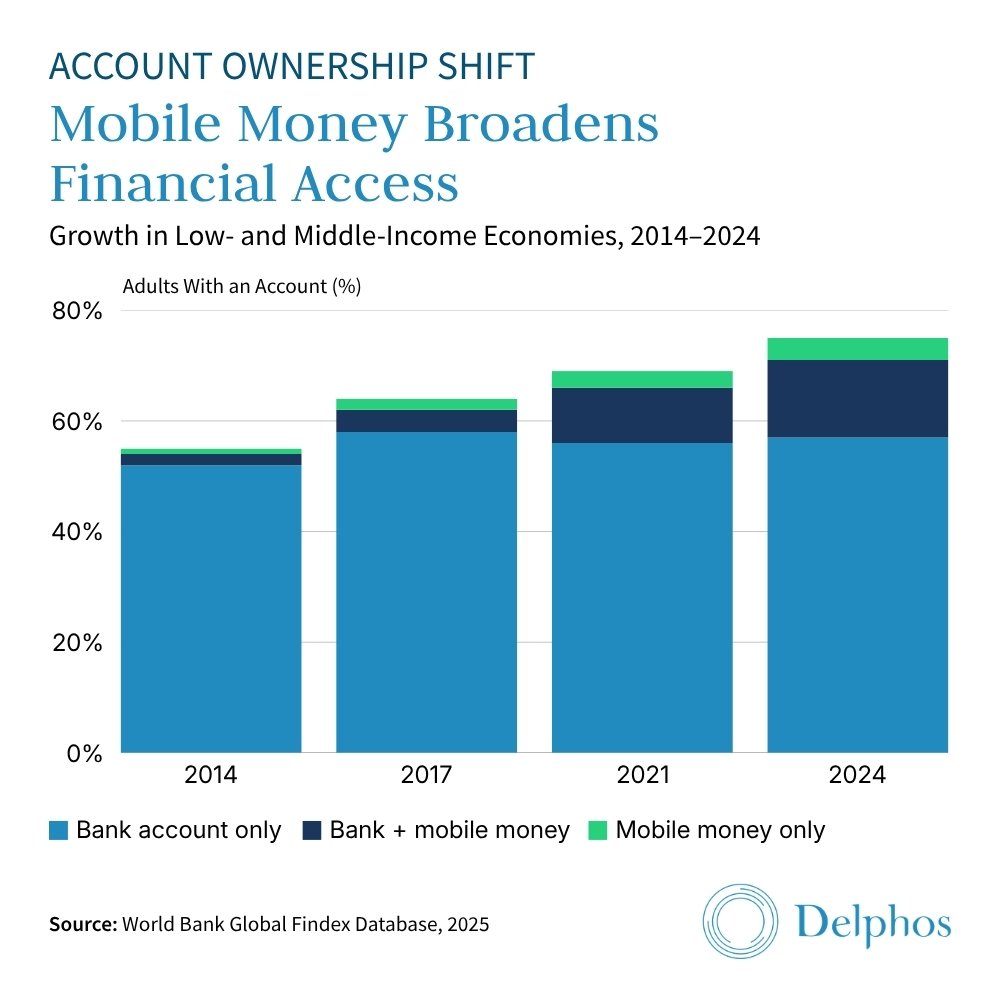 The 2026 environment for FinTech debt financing in Emerging Markets is defined by two measurable shifts. Digital payments infrastructure now processes volumes that meet creditor underwriting thresholds, and artificial intelligence (AI) credit data infrastructure produces the underwriting signals capital providers require. Both shifts are visible in 2025 deal flow: loan-book-backed facilities in West Africa, near-shoring-linked debt in Mexico, and multilateral syndications entering trade routes that lacked structured credit access three years ago.
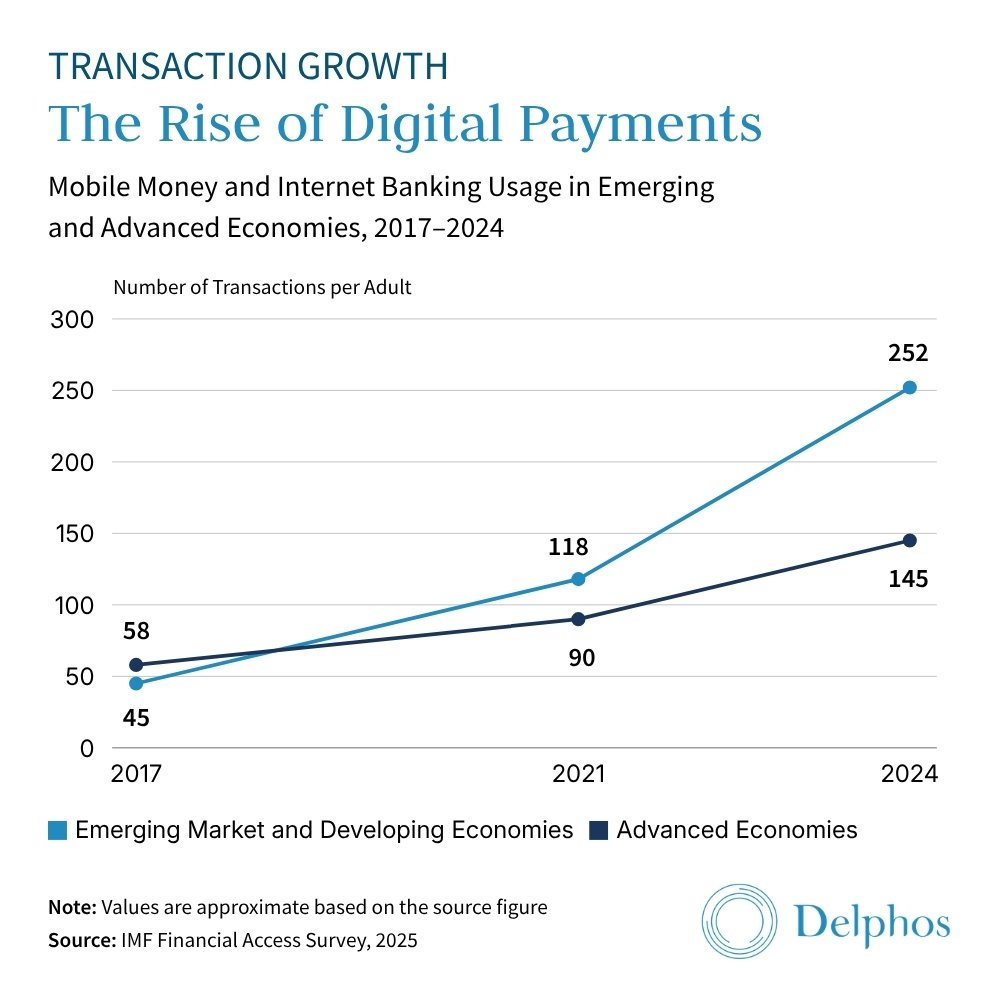
In advanced economies with mature financial systems, standardized credit scoring gives digital lenders direct access to conventional debt markets. Payments infrastructure across developing economies now processes volumes at underwriting-grade scale. Global mobile money surpassed US$2T in 2025, with Sub-Saharan Africa accounting for US$1.4T, or 66% of the global total. This volume profile, generated by digital infrastructure for banking and payments, produces the asset flow and operating history that development lenders underwrite. The Emerging Markets outlook 2026 shows multilateral capital rotating toward structured credit in corridors where digital lending volumes are concentrated.
Algorithmic credit infrastructure has changed the way investment committees across the financial industry evaluate digital lending companies. Default rate modeling, repayment pattern segmentation, automated credit scores, and know-your-customer (KYC) automation produce the credit quality signals that once required years of audited financials. Digital lenders that operationalized machine-learning credit scoring in 2023 and 2024 entered 2026 with the underwriting evidence development lenders require. The qualification path is now shaped by the credit data infrastructure the company already operates.
Qualifying for FinTech debt financing in Emerging Markets requires meeting three core criteria that institutional creditors evaluate before advancing any process. These are an operational track record of 18 to 24 months minimum, collateralizable loan book assets or documented cash flows, and alignment with the development-lender mandate covering financial inclusion, SDG impact, and governance standards that meet investment committee scrutiny.
Two loan types dominate institutional fintech lending in this segment. Loan-book-backed facilities use outstanding receivables, digital invoices, or payment flows as collateral, with terms calibrated to portfolio quality. They are the preferred products for digital lending companies and payments operators with volume-based business models.
Balance sheet facilities use corporate assets and audited financials, applying to businesses with longer operating histories. Traditional banks and commercial financiers favor this structure for regulated entities with established financial histories.
The global micro, small, and medium enterprise (MSME) financing gap stands at US$5.7T. IFC has targeted this asset class to expand access to credit for small businesses in developing countries through trade receivable and digital invoice strategies.
Qualification turns on loan book data quality, governance documentation, risk management frameworks, and alignment with regulatory standards. The application process for a development-lender facility takes 24 months on average to raise its first debt facility, and asset-backed structures are identified as the most adaptable alternative.
For Nigerian digital lenders, automated underwriting converts raw financial data into a qualification signal. Central banks across the region now track the adoption of digital technologies for algorithmic credit assessment as a financial stability metric, and machine-learning scoring models are replacing legacy assessment models as the primary collateral quality input. 87.5% of Nigerian FinTechs use AI for fraud detection, and 37.5% deploy automated credit scoring. The full guide to what creditors require in 2026 sets out the qualification framework.
“The FinTech debt transactions we have structured across Africa and Latin America close when founders arrive with clean receivables data, recognized governance, and a structure matched to their platform stage.” – Bart Turtelboom, CEO of Delphos.
 Near-shoring generates new payment flows that capital providers recognize as collateralizable assets. Supply-chain payments, cross-border settlements, and embedded finance engagements tied to manufacturing relocation produce the volume profile that lenders underwrite. 74% of business leaders now prioritize resilience investments in global value chains, accelerating this commercial channel formation. This creates structured lending opportunities for digital companies building against these trade routes rather than against a generic LATAM market thesis.
Capital providers’ appetite in LATAM concentrates on companies tied to near-shoring trade route flows. The Latin America embedded finance market reached US$38.8B in 2025, projected to expand to US$50.6B by 2030. Financial technology businesses captured 61% of all venture capital investment in Latin America in 2025, with payments and logistics operators linked to near-shoring attracting investment on the basis of growth potential in new commercial channels. Credit companies operating in these corridors structure debt against supply-chain payment processes rather than against balance sheet assets.
Foreign exchange (FX) exposure is the technical constraint that determines deal viability. These conditions intersect with geopolitical risk and trade shifts, and development lenders now accept local-currency cash flows backed by hard-currency hedging instruments as primary collateral. Interest rates and loan terms are typically pegged to benchmark hard-currency rates to align with the borrower’s revenue profile.
 The company has structured and closed debt financing engagements across Sub-Saharan Africa, Central Asia, and the Americas. Three completed deals illustrate the range of instruments, geographies, and FX risk approaches Delphos applies to these mandates, each addressing a qualification challenge that digital lending companies and payments operators face in 2026.
The company has structured and closed more than 600 deals and mobilized over US$20B for clients in Emerging Markets since 1987. The company’s Capital Raising and Transaction Advisory practice covers digital lending companies, payments operators, and embedded finance businesses across Egypt, Côte d’Ivoire, Nigeria, Chile, and Mexico, with loan-book-backed facilities, multilateral-led syndications, and FX-mitigated structures completed at each stage of the qualification process.
If your company is preparing for a development-lender or impact fund debt raise, Delphos designs the facility, identifies the right creditor pool, prepares the deal package and governance documentation, and manages the process to financial close.
Schedule a FinTech debt financing consultation to begin a deal-ready raise
Development lenders evaluate three core criteria: collateralizable loan book assets or demonstrable cash flows, an operating track record of at least 18 months, and alignment with mandates covering financial inclusion, SDG impact, and governance standards. Companies with monthly volumes above US$1MM and algorithmic credit data qualify faster.
Inclusive credit companies take an average of 24 months to raise their first facility. Preparation quality is the primary variable: loan book data integrity, governance documentation, and structure choice determine whether the process reaches financial close or stalls in due diligence.
Loan-book-backed facilities use outstanding receivables or digital invoices as collateral and are preferred by development lenders financing digital credit companies and payments operators. Balance sheet facilities use corporate assets, require a longer operating history and audited financials, and are favored by commercial banks.
IFC, IDB Invest, and FinDev Canada are the most active multilaterals in LATAM FinTech debt. IFC concentrates on loan-book-backed facilities and trade finance. IDB Invest focuses on embedded finance and supply-chain payment companies. Appetite in the region favors businesses with proven volumes, documented governance, and financial inclusion alignment.
Manufacturing relocation to Mexico and Chile generates new flows: supply-chain payments, cross-border settlements, and embedded finance volumes tied to new commercial channels. These flows are large enough for development lenders to recognize as collateralizable assets, creating structured lending opportunities for embedded payments and supply-chain finance companies.
Loan-book-backed senior debt is the primary instrument for payments operators with proven volumes, often structured as multilateral-led syndications pooling capital from multiple financiers into a single facility. Operators with strong KYC and AML frameworks qualify for larger facilities. Local currency instruments address the FX exposure.
Machine-learning credit data, including default rates, repayment patterns, and borrower segmentation, is now used by development lenders to evaluate loan book quality in developing economies. Among Nigerian digital lenders surveyed, 37.5% deploy automated credit scoring. Companies with documented credit data qualify for larger facilities and shorter due diligence.
Editorial
October 19, 2026 - Energy security now prices into Latin American power credit, and capital structure, not falling rates, decides which dispatchable projects close.

Editorial
October 12, 2026 - Mining finance in Latin America turns on capital structure and market selection, not price, when copper projects reach financial close.

Editorial
October 5, 2026 - Tariff access and near-shore capture reordered the 2026 Emerging Markets ranking, making bankability rather than forecast returns the deciding measure.
Discover Delphos' premier capital raising and financial advisory services, making an impact across five continents.
Learn More
Reach out to us to enhance your impactful business in private emerging markets by Delphos' tailor-made financial advisory and capital raising service.
Learn More
Delphos arranges capital raising (debt and equity) and transaction advisory for emerging-market project sponsors and operating corporates across Africa, Asia, Latin America and the Caribbean, and Emerging Europe.
Thank you for submitting the form. Our team will reach out to you soon.
In the meanwhile follow us on LinkedIn to get inspired daily.
Visit LinkedIn
We appreciate your interest in Delphos!
Could you let us know how you discovered us?
We are here to help. Reach out to schedule an introductory call with one of our team members and learn more about how Delphos Cybersecurity can benefit your organisation.

Tell us a bit about your needs so we can match you with the right advisor.

Stay ahead on impactful stories and industry trends in private emerging markets - the knowledge you need is just a click away.
We appreciate your interest in Delphos!
Could you let us know how you discovered us?


