


Editorial
Emerging Markets Debt: How Q3 2026 Repriced Every Raise
November 2, 2026 - Emerging Markets debt repriced through Q3 2026, so sponsors must size the senior-debt slot against observed terms, not 2025 forecasts.
Editorial


India leads the best Emerging Markets to invest in for 2026, on greenfield scale, artificial intelligence (AI) readiness, and South Asian growth.
Tariff access and near-shore capture reordered the 2026 map, moving Mexico and Vietnam above markets that rank on cost alone.
Lenders test country conditions before project economics, which makes bankability, not forecast returns, the measure that decides where funding lands.
AI readiness now shapes access to capital: Indonesia scores 0.52 against an Emerging Markets average of 0.40.
Local investors supplied 69% of limited partner capital to developing-economy funds in 2025, so home allocators now shape deal design.
This ranking scores the best Emerging Markets to invest in for 2026 across five factors: trade access, near-shore capture, logistics, AI readiness, and political stability. It is written for sponsors and finance leads choosing where to base an expansion that will need institutional debt or structured equity. The order moved from 2025 because trade barriers and supplier shifts relocated production, and investment followed it.
Private investment in Emerging Markets funds projects, expansions, and companies directly, so the best destinations are the ones where a deal can be financed on trade access, infrastructure, and rule of law. That test differs from public-equity appeal, which prices listed shares, not deal risk.
 The 2026 map differs from 2025 because trade barriers and supplier shifts moved private capital toward places that can absorb rerouted output. Global foreign direct investment (FDI) rose 6% to US$1.6T in 2025, and developing economies took US$901B of that total. Where the money lands now follows trade access more than labor cost.
Composition shifted more than the total did, and project numbers fell 25% in tariff-exposed, global-value-chain-intensive sectors in 2025. Over the same period, data centers added US$235B in announced greenfield and project-finance value, while those exposed sectors shed US$55B. The global capital trends behind 2026 conditions point the same way.
Trade volume is the second constraint, with world merchandise trade growth set to slow to 1.9% in 2026 from 4.6% in 2025. Producers already inside a trade deal hold their landed cost steady while rivals pay the duty. That gap is one of the structural capital shifts reordering where those flows land.
The 2025 order rewarded scale and cheap labor. The 2026 order rewards trade access and the room to host moved production. Southeast Asia shows what capture looks like, with FDI there rising 10% to US$225B in 2024, its second-highest level on record. Places that pair that inflow with working logistics moved up, and places selling into a trade wall moved down.
For a sponsor, the effect is plain. A 2025 shortlist built on wage rates and market size no longer shows where funding is on offer for new plants.
The scorecard rates each economy on five weighted factors. Tariff and trade access carries the most weight, near-shore capture ranks second, and logistics, AI readiness, and political stability complete the set. Every factor uses a published measure, so a sponsor can rebuild the score for any market outside this list.
Each factor maps to one of the forces shaping returns in 2026. Trade access leads because it sets whether goods made in a place reach their end market at a workable landed cost. Production relocation follows, measured by inbound project plans in moving sectors.
Logistics scores come from the World Bank Logistics Performance Index, built from hundreds of millions of shipment and vessel tracking records. Readiness uses the International Monetary Fund (IMF) AI Preparedness Index, where India scores 0.49 and China 0.63 against an Emerging Markets average of 0.40.
Stability uses the World Bank Worldwide Governance Indicators, which score Political Stability and Absence of Violence across 214 economies. That factor reads wider than politics. Convertibility, repatriation rules, and the depth of local-currency funding sit inside it, because a creditor lending in hard currency prices transfers risk next to the governance score.
Two related tests sit outside the five by design. Sovereign ratings and political risk insurance price a single deal, not a place, so they belong to the deal stage that follows the shortlist. The table sets out each factor against its measure, its source, its coverage, and its 2026 signal.
The Five Factors That Decide a Country’s 2026 Rank
| Factor | Metric | Institutional Source | Economy Coverage | 2026 Signal |
| Tariff and Trade | Most Favored Nation tariff share, trade growth | World Trade Organization (WTO) | Global | 1.9% trade growth |
| Near-Shore FDI | Greenfield project value | United Nations Conference on Trade and Development (UNCTAD) | Global | Data centers added US$235B |
| Logistics | Connectivity, dwell time | World Bank | Global | Tracking-data based |
| AI Readiness | AI Preparedness Index composite (0 to 1) | IMF | 174 economies | Emerging Markets average 0.40 |
| Geopolitical Stability | Political stability percentile | World Bank | 214 economies | Perception based |
Return forecasts move with the cycle, while bankability moves with conditions a creditor can test. Global growth is set at 3.1% in 2026, and the slowdown and the rise in prices are sharper across Emerging Markets and developing economies. A return built on 2024 conditions carries little weight in a credit committee.
Private investment choices start with what that committee can check. Allocations are still on offer to the countries that clear those tests, and Emerging Markets private capital fundraising rose 8% to US$71B in 2025.
India leads the best Emerging Markets to invest in for 2026, ahead of Mexico and Indonesia. Vietnam, Brazil, the United Arab Emirates, and Saudi Arabia follow, with Malaysia, Thailand, and the Philippines closing the list. Mexico and Vietnam climbed on near-shore capture, while India climbed on greenfield scale and AI readiness.
 China sits outside this ranking by design. It scores highest on AI readiness of any economy in this group and stays an index leader. It also drives the shift the other 10 places are capturing, which makes it a separate case.
Three spots changed against last year’s watch list. Mexico and Vietnam gained on moved production, and Indonesia gained on the AI infrastructure wave reaching Southeast Asia. Regional data backs the shift, with inflows across the Southeast Asian bloc rising 8% to US$226B against an 11% global decline. Developing Asia growth was raised to 5.1% for 2025, with South Asia at 6.5%.
Rank and instrument choice are linked, and economies with deep local banks and steady trade rules support long-tenor senior debt. Markets earlier in the capture cycle, where offtake contracts run shorter, tend to price structured equity or blended tools better. The instrument a place can carry is part of what puts it on the list.
 A country’s spot sets the shortlist, not the structure. Translate rank into a capital structure by matching the factor that lifted that market to the instrument it supports. Tariff access supports export-linked debt, moved production supports expansion equity, and stability scores set the tenor a creditor will accept.
Mexico shows how tightly the two connect, because around 80% of Mexican industrial output has the United States as its final stop. That makes tariff treatment a revenue variable, not a policy footnote. A structure built there prices trade-policy risk directly.
The investor base also changed. Local investors supplied 69% of limited partner commitments to Emerging Markets private capital funds in 2025, up from 49% in 2019. A deal that reads well to a home allocator now carries as much weight as one built for an offshore fund or for Development Finance Institution (DFI) review.
The working sequence for a sponsor is short. Shortlist on the five factors, test the leading two through independent feasibility work, then set the instrument before picking a site. Timing follows the shift, not the calendar, because capture windows open while a country builds capacity and narrow once rivals hold the supplier ties.
“We have structured capital across these markets for more than three decades, and we have learned that a country’s rank means little until the transaction itself clears institutional review.” – Bart Turtelboom, Chairman & CEO of Delphos.
The record behind that sits in closed transactions across these markets, several of them inside the places ranked above.
In Mexico, Delphos structured a US$12.5MM limited partner commitment to PC Capital Development Fund II, backing the near-shore reference market. In Brazil, Delphos arranged US$30MM for TechMet to build a strategic minerals plant, inside the trade-exposed minerals theme.
In India, Delphos raised US$155MM for Applied Solar Technologies, funding an 80 MW solar project in the region’s top greenfield destination. In Indonesia, Delphos arranged US$350MM for the Sarulla Geothermal Plant, a 330 MW project in a Southeast Asian near-shore winner.
A country’s spot on this list signals where conditions favor an expansion, but only a financeable structure turns that signal into built capacity. Capital Raising arranges the debt or structured equity that carries a shortlisted market from ranking to committed funds, while Transaction Advisory tests whether the market itself holds up first. Delphos has closed transactions in more than 100 countries and builds financing that meets institutional and DFI review. The work suits mid-market sponsors and corporates siting an expansion across Emerging Markets that will need an institutional raise.
Map the shortlist to a capital structure before the expansion budget is set →
Five scored factors decide it, not headline returns: trade and tariff access, near-shore capture, logistics, AI readiness, and governance stability. Lenders test those country conditions before they test the project, because a weak jurisdiction score caps the tenor and pricing a structure can carry.
There is no single window. The read is on two signals: whether a trade framework has settled enough to hold landed costs steady, and whether local project pipelines still have unclaimed supplier slots. Both are observable before any ranking updates.
India, though the answer depends on where the output is sold. India suits sponsors serving domestic demand and diversified export routes. Mexico suits sponsors whose buyers sit in the United States. A country ranking sets the order, and the end market decides which order matters.
An exchange-traded fund (ETF) buys listed shares and gives daily liquidity with no control over the asset. Private investment commits capital to one company or project on negotiated terms, with board or lender rights and no exit until a sale or refinancing.
Yes. Readiness signals digital infrastructure and workforce depth, which data-center and technology capital now follow. The International Monetary Fund AI Preparedness Index is the measure used, with Indonesia at 0.52 against an Emerging Markets average of 0.40. It is one factor, not the whole picture.
A bankable feasibility study, a defensible capital structure, and evidence that country conditions clear institutional and Development Finance Institution (DFI) review. A country ranking produces the shortlist. The structuring work is what converts a shortlisted market into committed capital at a tenor and price that hold.
Editorial
November 2, 2026 - Emerging Markets debt repriced through Q3 2026, so sponsors must size the senior-debt slot against observed terms, not 2025 forecasts.

Editorial
October 27, 2026 - Emerging Markets sponsors match the supply chain finance instrument to their position in the chain and the constraint that binds.
Editorial
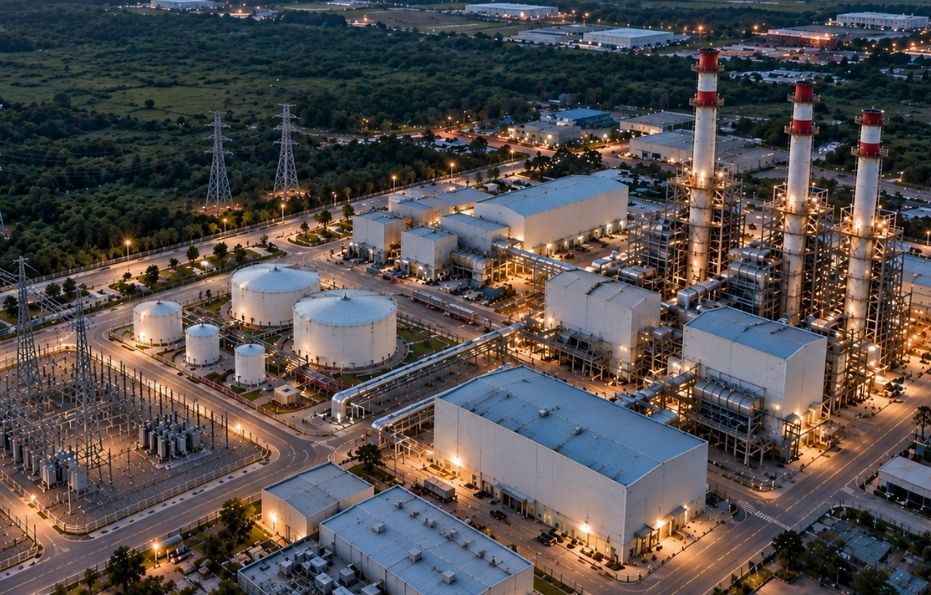
October 19, 2026 - Energy security now prices into Latin American power credit, and capital structure, not falling rates, decides which dispatchable projects close.
Discover Delphos' premier capital raising and financial advisory services, making an impact across five continents.
Learn More
Reach out to us to enhance your impactful business in private emerging markets by Delphos' tailor-made financial advisory and capital raising service.
Learn More
Delphos arranges capital raising (debt and equity) and transaction advisory for emerging-market project sponsors and operating corporates across Africa, Asia, Latin America and the Caribbean, and Emerging Europe.
Thank you for submitting the form. Our team will reach out to you soon.
In the meanwhile follow us on LinkedIn to get inspired daily.
Visit LinkedIn
We appreciate your interest in Delphos!
Could you let us know how you discovered us?
We are here to help. Reach out to schedule an introductory call with one of our team members and learn more about how Delphos Cybersecurity can benefit your organisation.

Tell us a bit about your needs so we can match you with the right advisor.

Stay ahead on impactful stories and industry trends in private emerging markets - the knowledge you need is just a click away.
We appreciate your interest in Delphos!
Could you let us know how you discovered us?


