


Editorial
Mining Finance in Latin America: Why Structure Beats Price in 2026
October 12, 2026 - Mining finance in Latin America turns on capital structure and market selection, not price, when copper projects reach financial close.
Editorial
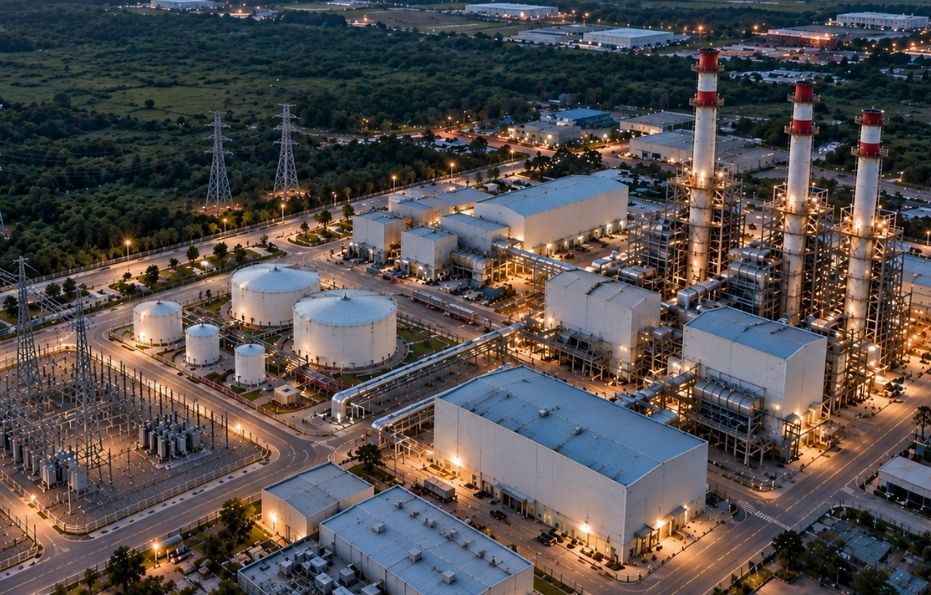

Energy security now prices into power project credit, making reliable supply a financing attribute instead of an engineering preference.
March 2026 removed 10.1 mb/d of global oil supply, resetting the energy security premium Latin American buyers pay.
Emerging Markets energy projects carry a cost of capital two to three times advanced-economy levels, which the capital stack must absorb.
Through 2026 and 2027, energy security demand supports the offtake while DFI layers carry the currency and political risk.
Delphos closed firm-capacity financings across the Dominican Republic, Mexico, and Argentina, each anchored on long-term contracts and senior debt.
This outlook examines how Latin American sponsors will finance dispatchable generation through 2026 and 2027, as energy security moves from policy language into lender credit committees. It is written for developers and corporates raising institutional debt for gas-to-power, LNG-to-power, and baseload projects. Capital structure, not a fall in rates, now decides which projects reach financial close.
Energy security is the reliable, affordable, and resilient supply of power, available when demand calls for it. Dispatchable generation, which operators can turn up or down on command, is the operational core of energy security.
 For a power project in 2026, energy security means that firm, reliable supply carries a measurable financing premium. Lenders now price the ability to deliver electricity through a supply shock, not just the levelized cost of producing it. Energy security has become a credit attribute, not an engineering preference.
Emerging Markets hard-currency sovereign bond debt topped US$1.4T in 2025, and in several economies the real interest rate on outstanding domestic bonds now exceeds projected real GDP growth. Latin America draws only 5% of global private clean energy investment, held back by high rates and thin long-term finance. Energy security changes that arithmetic by attaching contracted revenue to firm capacity.
March 2026 removed 10.1 mb/d of global oil supply, the largest shock the oil market has recorded. World Bank forecasts put Brent at US$86/bbl across 2026, easing to US$70/bbl in 2027. Brent’s average daily swing reached US$4/b in April and May 2026, four times the US$1/b a year earlier.
 Dispatchable power delivers energy security because operators control when it runs. Hydro, wind, and solar output follow rainfall and weather. Gas-fired and baseload plants follow instructions. In a region where a dry season can strip terawatt hours from the supply, that control converts installed capacity into firm, contractible electricity.
In May 2026 Latin America ran on 43.4% hydropower, 24.4% natural gas, and 11.6% wind. Higher gas output covered a 10 TWh decline in hydro generation. Fossil fuels supplied 35% of regional electricity in 2025, down from 47% in 2015, so gas works as the stabilizer inside a decarbonizing mix.
Brazil followed the same path, with primary gas supply up 12% in 2025 as gas-fired plants backfilled hydropower. Firm capacity underwrites the renewable energy opportunities that attract headline investment, and energy security is why the pairing holds.
Latin America holds roughly 142 GW of operating oil and gas capacity, with a further 71 GW prospective. Each disruption at a chokepoint such as the Strait of Hormuz raises what an off-taker will pay for electricity that arrives regardless. Energy security, priced this way, is a revenue line.
Sponsors finance dispatchable power in 2026 by building risk cover into the capital structure before approaching the market. Long-tenor commercial debt alone no longer clears at workable pricing. The arrangements reaching close pair a contracted offtake with a development finance institution (DFI) layer that absorbs currency and political risk. Energy security supports the revenue; the capital stack supports the debt.
The cost of capital for energy projects in Emerging Markets runs two to three times higher than in advanced economies or China. A fixed-price purchase agreement closes part of that gap, because it converts a merchant revenue forecast into a receivable a creditor can size 15-year debt against.
Latin American international bond issuance reached a record US$187B in 2025. Thematic issuance within that total fell 47% to US$17.6B, just 9.4% of the market. The constraint is pricing: the average coupon on cross-border bonds rose to 7.1% in 2024 from 6.9%. For gas-to-power, where tenors run long, bankability decides deals.
DFIs supply the layer commercial creditors will not. IDB Invest mobilized US$7.7B of private capital in 2025 across 14 blended-finance transactions worth about US$3.2B. Guarantees, concessional tranches, and anchor commitments move foreign exchange (FX) and political risk off the commercial tranche, which is the practical test of what a DFI will anchor.
Each instrument allocates a different risk. A partial credit guarantee covers a defined share of debt service, so the commercial lender prices a shorter effective exposure than the contract tenor implies. A concessional tranche sits junior to the senior layer and absorbs first losses.
An anchor commitment from a development bank signals diligence that other lenders rely on, which shortens syndication. Political risk cover addresses expropriation, transfer restriction, and breach of contract, the exposures that keep energy security projects off commercial balance sheets.
The table below compares three financing routes on cost, tenor, risk cover, and resilience to higher-for-longer rates.
| Financing route | Cost | Tenor | Risk cover | Resilience to higher-for-longer rates |
|---|---|---|---|---|
| Commercial project debt | Emerging Markets baseline | Capped by commercial appetite | None embedded | Weakest |
| DFI-anchored blended debt | Concessional layers compress the senior spread | Extended by the anchor commitment | Guarantees carry FX and political risk | Strongest |
| Thematic bond | Priced to investor demand at issuance | Fixed at issuance | None embedded | Weakening as issuance thins |
Offtaker credit sets the ceiling on what a power project can borrow, and the spread across Latin America is wide. Chile carries an ‘A’ foreign-currency sovereign rating, the highest in the region, which gives its utility counterparties a credit floor that supports long-tenor debt with light external cover.
Energy security demand is regional. The capital stack that delivers it is country-specific, and the same project that clears on commercial terms in one market needs a guarantee layer in another.
Contract length is the second filter. Competitive auctions across Mexico, Argentina, Colombia, and Chile allocate 15- to 20-year power purchase agreements, which is the tenor a 15-year debt facility needs to amortize against. Where auctions run to schedule, the revenue line is contractible and energy security converts into a receivable. Where they stall, projects revert to merchant exposure and the financing package has to carry the gap.
Development bank deployment follows the same map. The Development Bank of Latin America and the Caribbean (CAF) approved US$300MM in 2025 to strengthen Mexican electricity infrastructure, including the Federal Electricity Commission (CFE) investment plan.
“We have structured dispatchable power across Latin America through harder cycles than this, and the discipline that reached close then is the discipline that reaches close now.” – Bart Turtelboom, Chairman & CEO of Delphos.
Energy security is what gives a long-term purchase agreement its durability through 2026 and 2027, because a buyer paying for firm supply keeps paying.
Through 2027, the question is not whether energy security demand holds. It is whether the capital stack assembled this year still works when the contract reprices. Facilities closed on a guarantee layer and a long-dated purchase agreement absorb that repricing. Merchant positions do not, and energy security alone will not cover the gap.
 Dispatchable Power Financing in Practice
Each of the following transactions financed firm generation with senior debt. That capital layer holds its value when lenders price supply reliability, which is the condition energy security now sets.
Delphos has arranged firm generation across Latin America for more than two decades, and the track record runs through the markets where energy security is now priced.
In the Dominican Republic, AES Andres raised US$145MM for an integrated LNG-to-power project, pairing a combined-cycle plant with an import terminal to secure firm supply. In Mexico, AES Merida III raised MXN$2.1B for a 484MW combined-cycle gas turbine plant, structured around a long-term offtake. In Argentina, AES Parana raised ARS$235MM in senior debt for an 830MW plant, a senior-debt arrangement financed at scale.
Three markets, three currencies, one structuring approach.
Energy security has made reliable power worth more in 2026 than it has been in a decade, and the capital to build it costs more. Structure closes that gap. Capital Raising covers the arranging and negotiating of long-term debt, including the DFI and risk-mitigation layers that hold under higher rates, while Transaction Advisory delivers bankable feasibility work and financial modeling. Delphos has mobilized more than US$20B across 600+ transactions since 1987, and works with Latin American sponsors raising institutional debt for gas-to-power and baseload projects.
Structure for higher-for-longer rates in Latin American power now →
Reliable, affordable power supply determines whether a project produces revenue a creditor will lend against. In Emerging Markets, where capital costs run two to three times advanced-economy levels, energy security converts a generation asset into contracted cash flow that supports long-tenor debt.
Development finance institutions absorb risks commercial creditors will not price, using guarantees, concessional tranches, and anchor commitments. That cover lowers the credit spread on the senior tranche and crowds in commercial capital, which shortens the path from mandate to financial close.
Gas and renewables work together rather than in competition, with gas supplying the firm capacity that backstops hydro and intermittent output. Natural gas holds roughly a quarter of the regional mix, and it covers hydropower when rainfall falls short.
Higher-for-longer rates raise the cost of the 15-year debt power projects depend on, which compresses equity returns and lengthens the path to close. Pricing pressure moves the decision onto tenor and contracted revenue rather than headline interest cost.
Off-taker credit quality comes first, followed by foreign exchange exposure where revenue is local and debt is in dollars, then political and regulatory risk. Supply resilience is priced the same way: contract terms and DFI guarantees allocate each exposure away from the commercial tranche.
LNG-to-power is a reliable energy security option when the fuel supply is contracted, because it adds firm, dispatchable capacity quickly. The exposure moves upstream to fuel price and cargo availability, so reliability depends on contract length, supplier diversification, and storage, not on the plant itself.
Editorial
October 12, 2026 - Mining finance in Latin America turns on capital structure and market selection, not price, when copper projects reach financial close.

Editorial
October 5, 2026 - Tariff access and near-shore capture reordered the 2026 Emerging Markets ranking, making bankability rather than forecast returns the deciding measure.

Editorial
September 21, 2026 - Telecom financing in frontier markets closes when one US$ instrument prices currency, tenor, and geopolitical risk inside a single structure.
Discover Delphos' premier capital raising and financial advisory services, making an impact across five continents.
Learn More
Reach out to us to enhance your impactful business in private emerging markets by Delphos' tailor-made financial advisory and capital raising service.
Learn More
Delphos arranges capital raising (debt and equity) and transaction advisory for emerging-market project sponsors and operating corporates across Africa, Asia, Latin America and the Caribbean, and Emerging Europe.
Thank you for submitting the form. Our team will reach out to you soon.
In the meanwhile follow us on LinkedIn to get inspired daily.
Visit LinkedIn
We appreciate your interest in Delphos!
Could you let us know how you discovered us?
We are here to help. Reach out to schedule an introductory call with one of our team members and learn more about how Delphos Cybersecurity can benefit your organisation.

Tell us a bit about your needs so we can match you with the right advisor.

Stay ahead on impactful stories and industry trends in private emerging markets - the knowledge you need is just a click away.
We appreciate your interest in Delphos!
Could you let us know how you discovered us?


